No, Red Wedge will not be fucking moving to Canada, no matter how close to reality the phrase "President Trump" may be getting... With all due respect to our canuck comrades.
What we will be doing, however, is presenting not one but two panels at this year's North American iteration of Historical Materialism, which will be held at York University in Toronto on the 13th, 14th and 15th of May. The abstracts for the panels are below.
As the first abstract says, we are planning to premiere Red Wedge No. 2, "Art Against Global Apartheid" at the conference...
Read moreSixteen men were executed in the aftermath of the Easter Rising – the seizure of the General Post Office in Dublin by Irish volunteers that took place one hundred years ago this week. Among those executed was James Connolly: leader of the Irish Citizen Army, trade unionist, revolutionary Marxist, de facto commander-in-chief of the Easter Rising.
Connolly has been canonized in the century since his death. That death – at the hands of an occupying British Army – is by itself enough to command respect of anyone concerned with self-determination, but there is also a certain tragedy in how overlooked his eloquent words and ideas can be, even today.
Read moreRed Wedge will be publishing a series of articles surrounding the April 1st strike. These will deal with the impact of austerity on artists, educators and social life, both materially and ideologically; the ongoing neoliberal assault on all that is not of practical and immediate use to capital. We are putting out a call for artists, in the coming two weeks, to make drawings, collages, graphic images, or anything else that might be of use to the struggle. Submit your images to us by March 27 for consideration.
Read moreIt just so happened
I was stumbling, bumbling, fumbling around
a bit tipsy and lit from the whisky that day.
I walked, talked, and came across some chalk,
Which in big, bright, bulbous letters yelled,
“Lecture this way!”
Read moreThere is nothing about that six second video that is not wonderful and beautiful. A diverse crowd of anti-racists – Black Lives Matter of course, but also supporters of Bernie Sanders, immigrant rights and anti-Islamophobia activists – jumping up and down and shouting Kendrick Lamar lyrics in celebration: they just shut down Donald Trump.
Trump supporters and other conservatives – as well as Trump himself – are now whining about “thugs,” and threatening to show up at Sanders’ rallies. Centrists and a great many liberals are wringing their hands about whether Trump’s “free speech” has been violated – as if Trump or his supporters have ever shown such regard for our right to express ourselves.
Read moreYes, there were Dada women!
One hundred years of Dada this year. Cabaret Voltaire lasted less than six months from its opening, February 1916 in Zurich, Switzerland. Who would have guessed that its obscure beginning would herald a world-rocking negativity that was at the same time an ardent demand for renewal?
The group, idea, movement that it created, Dada, itself didn’t last very long but quickly mutated into surrealism and somehow made its radical presence known worldwide.
Read moreThe Chicago Women's Graphics Collective, much like the Chicago Women's Liberation Union and its Rock Band, is one of those neglected facets of the feminist movement in the 1970's. That is beginning to change with the release of films like She's Beautiful When She's Angry, as well as a broader interest being shown by a younger generation of feminists in their roots and history. The Graphics Collective created stunning work, some of which has found itself into the most well known iconographic annals of "the Long Sixties," even if its creators are far too infrequently acknowledged.
The text below is from Estelle Carol, a founding member of the CWGC. Still a feminist and socialist, she is now one half of the political cartoon duo Carol-Simpson, as well as a web designer in suburban Chicago. She also helps maintain the CWLU Herstory Project.
Read moreHow can we crack the vote? We can't - it's made
of blood. It's built of creaking spines and skulls,
surrounded by a hundred filthy gulls
grown fat and sleek from scraps piled in the shade.
No, we can't crack it, only grab its tail
and climb the gory bones straight to the neck
and cling on for dear life, we scrabbling specks,
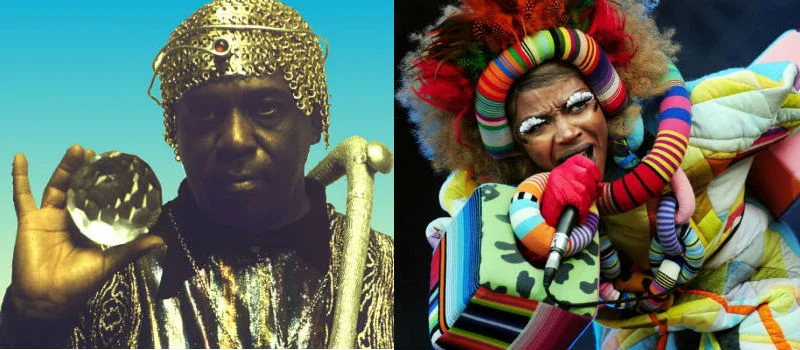
Read moreThere is no getting around the popularity or cultural clout that both Afropunk and Afrofuturism have in contemporary culture. It’s been over ten years since James Spooner’s film on Afropunk came out, the website that bears its name is visited by hundreds of thousands each month, and the yearly festival recently expanded from Brooklyn to Atlanta and will soon be making its way to Paris. Afrofuturism, for its part, has become quite trendy in certain circles, with advertising companies attempting to cash in on its aesthetic. It is not difficult to see its influence in a growing array of artists.
Read moreOn January 8th, 9th and 10th, hundreds of activists, scholars, radicals and revolutionaries gathered in Philadelphia for the Black Radical Tradition conference at Temple University. The conference was a success. Featuring Angela Davis, Robin D.G. Kelley, Vijay Prashad, Charlene Carruthers, Keeanga-Yamahtta Taylor, Glen Ford, a call-in from Mumia Abu-Jamal, and many others, the conference interjected into the current moment of Black struggle in the United States a particular reminder of the rich and varied interaction between socialist and anti-capitalist ideas and the goal of Black liberation.
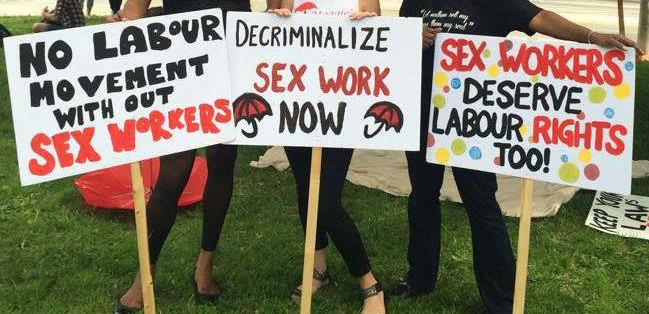
Read moreWhat does it mean to be “unrapeable?” It can mean, among other, almost limitless possibilities, that the labor we perform, the industry we work within, those that consume the products of our labor, and those that try desperately to deprive of us self-determined working conditions, somehow belongs to everyone but us. It means that our bodies are meant for others. It means we are robbed of control over our art and our labor, which are ultimately the same. To be “unrapeable” is to presume nymphomania. It means consent is rendered irrelevant. It devalues our bodies, our art, and our labor to the point of only ever being (to the chauvinist) in service of male desire.
Read moreEnter Donita Van Pop. She sits down on a swing set that is located on the left side of the stage. The stage lighting is a mixture of bright pink and purple. She sits on the swing, and the scenery behind her switches from a blank wall to a dreadful park background. It is of trees, bushes, and a few flowers and looks like the picture you drew in kindergarten that your poor parents were obligated to place on the fridge. Such a shame. You really made the kitchen ugly for almost a year.
Donita Van Pop: The world is mad. (Puffs her cigarette) But when you have great tits like me, it’s a little less. (Ms. Pop readjusts her bra strap that peeks out of her black and white polka dot dress. She takes another puff of her cigarette)
Read more"Black Art Matters." If there were a way to sum up the thrust of this essay in one very brief sentence then that would be it. W.E.B. DuBois is one of those thinkers who needs very little introduction: lifelong socialist and Black liberationist, founder of the N.A.A.C.P., author of what is still to this day one of the definitive books on Black Reconstruction in the south. What is often overlooked is how central art was to DuBois' ideas about Black freedom in the United States.
That DuBois had ideas about art is not very surprising; a writer whose theories were as far-reaching and as all-encompassing as his is bound to encounter the milieu of human creativity at some point. When he claims that "all art is propaganda" he is not claiming that all art should be didactic or stump for a cause, merely that all art, whether honest about it or not, carries with it ideas and social consciousness...
Read moreTa-Nehisi Coates' sharp criticism of Bernie Sanders on racial justice generally, and the issue of reparations in particular, has kicked up some interesting discussion and heated debate. Left responses to Coates piece – and Coates’ subsequent responses to his critics – have foregrounded once more the importance of thinking through the relationship between “race” and “class” in the imagination and the political strategy of an emancipatory social movement. The importance of such discussions, though clearly relevant to the current Presidential campaign, extends well beyond it, revealing and potentially informing the state of the radical imagination, as expressed in artistic works, critical discourse, as well as social movement culture, tactics, and strategy.
Read moreIn October, 2015 Red Wedge's Adam Turl gave a lecture, "For Art as Epic Theater" at the Brett Wesley Gallery in Las Vegas, Nevada and Project 1612 in Peoria, Illinois. These artist talks coincided with the "13 Baristas" exhibit in Las Vegas and the "Kick the Cat" show in Peoria. The audio above is from the Las Vegas presentation and includes the discussion that followed. The lecture ends around the 45 minute mark. Turl makes the case for seeing the art space as a theatrical space. In addition he advocates for the alternating of distancing and non-distancing artistic tropes. Finally, Turl argues for Epic narratives in art. This includes the ancient mythological nature of the Epic as well as the inclusion of a multiplicity of proletarian narratives (neither idealized nor detached from social and economic relationships). Turl would like to thank both galleries, and the generosity of the Brett Wesley Gallery in particular, for their help in facilitating both the exhibitions and artist presentations.
Read moreContemporary capitalism has produced stark and contradictory forms of development that by extension produce equally contradictory ways of understanding culture and the phenomenon of cultural exchange. The exchange of commodities, ideas and forms of artistic expression has always been a feature of capitalist development. Neoliberalism, however, has accelerated and accentuated these phenomena; therefore the left must reconsider the way we engage with questions of culture and cultural exchange.
The term “cultural appropriation” is one such attempt at engaging with cultural exchange, and one which has moved into common parlance among the radical left over the past decade. However, much of the theory that has emerged to explain cultural exchange, although rooted in an anti-racist instinct, is a product of post-colonial theory.
Read moreDirty his name? The dirt was always there,
just carried under nails of struggling girls,
in rucksacks, tossed in cupboards, hidden, curled
in elbows, tucked between their hats and hair.
The dirt was always there, beneath the shine,
between the lines we thought we understood,
in laurel leaves we garland round the good
Read moreThis is NOT an obituary. Indeed this article was written on Friday Jan 8th and Saturday Jan 9th. It is clear now that the meaning of "Lazarus" on the new record cannot be reduced to the Thin White Duke persona, though it is clear that, of all of his personae, Bowie felt most comfortable staging his death – his final work of art – using the persona of the dying, emaciated mid-seventies iteration of his chameleon-like ch-ch-ch-changes. The very act of planning an album release – including a tremendously disturbing music video of a very sick Bowie – around one’s death seems of a piece with Bowie’s lifelong artistic project…
Read more"Corpocracy,” currently at the Station Museum of Contemporary Art in Houston, provides another opportunity to reexamine important questions of a genuinely militant and engaged art practice. The show features political, mostly contemporary work by artists such as Michael D'Antuono, Kenneth Tin-Kin Hung, Packard Jennings, Eugenio Merino, Yoshua Okón, Stephanie Syjuco, and Judi Werthein. One arts collective is featured as well: the Beehive Design Collective.
Modeled on retro, aluminum signage, with chasing lights that flicker on and off in different patterns, Steve Lambert’s Capitalism Works For Me! True/False (2011) spells out the work’s exclamatory title...
Read moreSince appearing last summer, Ta-Nehisi Coates’ book Between the World and Me has sparked enthusiastic discussion, from Democracy Now! to the Daily Show, from The Atlantic to Facebook, from classrooms and hallways to street corners and barbershops. The text has become a NYT #1 best-seller, has now won the National Book Award for non-fiction, and has no doubt been largely responsible for earning its author a prestigious MacArthur “genius” grant.
Among the many questions being widely discussed is one of literary lineage: Is Ta-Nehisi Coates the new James Baldwin?
Toni Morrison prompted this question with an exuberant back cover blurb, perhaps singlehandedly guaranteeing that Between the World And Me would climb the best-sellers list...
Read more