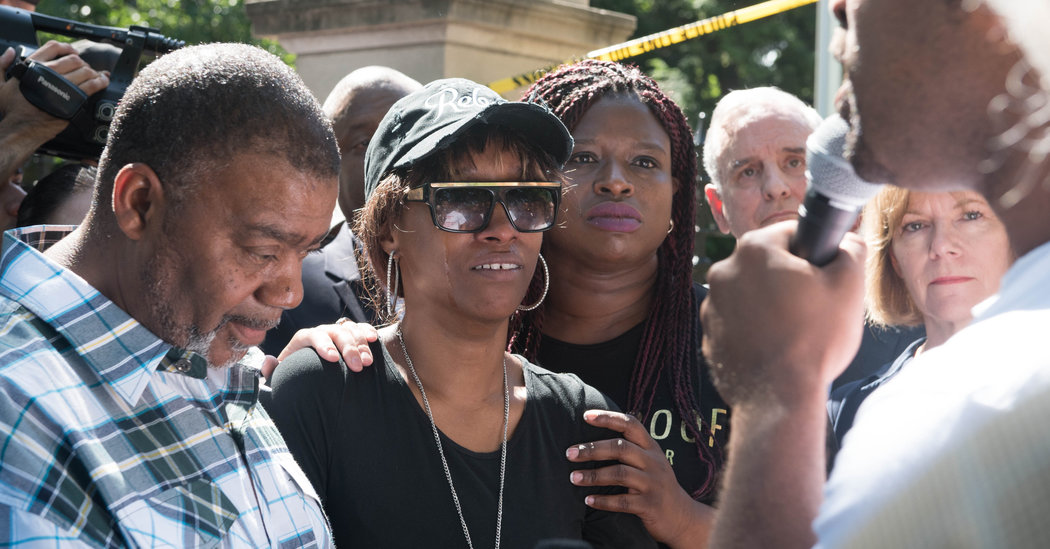
This text begins with facts, they will not be argued here. We live in a police state founded on white supremacy. Philando Castile has been murdered along with thousands of others for being black. For white supremacy blackness is both a necessary other and its greatest threat.
Any analysis of what Diamond Reynolds did when she livestreamed the aftermath of Philando Castile’s murder will be incomplete and totally insufficient to meet the demands of her call for justice. “Truth makes a hole in knowledge.”
Read moreAnnihilate, the new comic by Brandon Daniels and Sam Boven (Hive Mind Comics), begins with what appears to be some kind of microscopic cell, bacteria or virus. It divides. It then relinks as it grows. It is part of a subterranean network, a complex ecology. Evolutionary biology runs its course. It produces larvae and insects. “The grotesque concept of the body is not a closed completed unit."
Read moreThere are those days that seem longer than most. Days when I want to hole up in my crummy corner of the planet apartment complex and never leave. Usually I'm a very social being but we live in a wild world ya'll and sometimes it all feels like too much. Bad friends, bad times, bad relationships, bad vibes. I close my doors, close my eyes, and find reassurance. "Eyelids", produced by Dalessio and I, is an attempt to explore that thought. Hopefully I can uncover the same kind of lyrical honesty throughout my upcoming E.P. Impressions as I did in this single.
Read moreIf you wanted to understand my mother’s commitment to social change, I would start out with her belief, “We don’t become who we are in a vacuum; we are shaped by those around us and our experiences and time.” Born in 1909, Mary Perry Stone grew up in a family of seven in the small town of Jamestown, Rhode Island; she described her childhood as happy and developed a love of art from an early age.
When she was fifteen years old she worked for a summer for a very wealthy family in Newport, Rhode Island who said if she worked for them at their winter home in New York City, she could take art classes at the Art Students League. While the Art Students League experience made her want to continue to study art in New York City, she found the wealthy family shallow and backbiting; the person she admired most was the family’s kind chaperone and cook who had helped her.
Read moreCan America ever truly face its racism – both past and present – for what it truly is? Or is the history of forced migration, bondage and slave labor, legal apartheid, incarceration and horrific state violence too much for it to survive such a revelation? Can it endure the psychic shock and endeavor in some kind of pursuit of truth or reconciliation? Or will it simply implode, come apart at the seams and make way for something new? Something which, hopefully, would not have genocide running through its veins? Langston Hughes tells of a man urging us to “let America be America again,” but Hughes is not so sure such an America ever existed. Neither should anyone today.
Read moreIn this place
(a)
of radiator heat
of knife wounds
of claustrophobia
of totems like broken teeth
Read moreThe playwright Bertolt Brecht, in his polemics with the theorist George Lukács argued: "Even those writers who are conscious of the fact that capitalism impoverishes, dehumanizes, mechanizes human beings, and who fight against it, seem to be part of the same process of impoverishment: for they too, in their writing, appear to be less concerned with elevating man, they rush him through events, treat his inner life as quantité negligeable..."
Read moreRed Wedge is proud and humbled to be the only English language publication examining all the arts from a Marxist viewpoint. Our second issue, “Art Against Global Apartheid”, dropped in May, and we want you to come celebrate it with us. We will have copies of RW2 available for purchase, as well as other cool items (posters, pamphlets, etc). If you're new to the publication, a long time reader who wants to show support, or just want to come talk art and radical politics, we expect to see you there.
Read moreThe model of “self-taught genius” ignores the social genius of Darger’s Child Slave Rebellion. After all, Darger’s work was shaped by the very real instructors of his life; his kind father, his brutal treatment as a ward of the state of Illinois, the “dead-end” proletarian job that awaited him in adulthood. It is no accident that Darger’s epic illuminated manuscript is, at its core, about a rebellion of child-slaves. Nor are his transgender heroes necessarily a mere accident of individual genius or naïveté. Maybe they are glimpses of the future emancipation that could not yet be articulated.
Read moreRed Wedge lost a friend and supporter this past week when Matthew Caygill died. Matthew was a longtime fixture in the British socialist movement and most recently was involved in Left Unity. He was a keen thinker and well-known as a warm and dedicated comrade. His nearest and dearest have our sincerest condolences.
Matthew was also someone fascinated with the intersection of arts and radical politics. When those of us with RW first encountered him, it was on panel at the Historical Materialism conference in London where he spoke on the connections between the Beatles and the left of the 1960’s, a topic far too often unacknowledged past the most general discussions of John Lennon’s post-Beatles days. In fact, it was the topic of culture and the Left in the Sixties to which he was dedicating his PhD studies.
Read moreConsumer Grade Film is producing a feature-length movie, In Circles, and they need your help. As they write on their website:
Consumer Grade Film is a U.S. Midwestern collective of filmmakers focusing on low-budget, socially-conscious projects. Our current works in progress include the short, Ubercreep, the feature length film, In Circles, and the YouTube channel, VHS Girl. We are open to collaboration with other filmmakers focusing on similar content.
Read moreThe experimental hip-hop group clipping. have a new E.P. out. It’s called Wriggle. The group’s M.C. Daveed Diggs has recently become nothing short of a Broadway celebrity lately since winning a Tony for his role in Hamilton. The man is a phenom, an insane talent on the microphone. There’s no question about this. Diggs’ more usual fare with clipping. is, however, of a somewhat different fare. As I’ve put it previously, he’s far more Marquis de Sade than Lafayette, and clipping. fit right in with the insurgence of “industrial hip-hop” we’ve seen over the past few years that also includes the likes of Death Grips. Here’s the title track and lead single from the new E.P.
Read moreA collection of anti-racist activist and photographer Syd Shelton’s work from Rock Against Racism has been collected together for the first time. Is this book a nostalgic trip to the bad old days of 1970s racial conflict or does it have something to offer a new generation fighting the changing face of racism in the 21st century? Maybe both?
Shelton’s starkly black and white photographs portray the sharp contrasts in 1970s Britain. National Front marchers and anti-racist crowds, the police and the youth on the street, the punks and Rastas, Sikh pensioners and black and white kids, the bands and the audiences.
Read moreI have always believed that art and magic were the same thing. In magic, you can manifest power by manipulating objects. These objects (such as images, symbols, and signs) could be utilized to induce activity on the forces of nature and create different mystical phenomena.
This is the main reason why the majority of my works are expressionist ink sketches with figurative representation of resistance against capitalism, patriarchy, racism, imperialism, and other backward manifestations. I believe expressionism is a product of resistance against impressionism and academic art; an art movement charged by emotions, spirituality, and mysticism.
Read moreThee Mistakes was an accident. It did not slip from our tongues fraught with meaning or even mystery; not at first. Much like the systems under which we all live, it was a small idea at first, a placeholder for something better that was yet to come. And like those systems, it stuck. It caught on; we ran with it.
Upon some reflection, though, it came to represent a certain truth. It had felt right because our existence, our collaboration, and the fruits of our discourse highlighted that there were errors, in the system, in our art, our lives, and that we, somehow, had begun to address them.
Read moreThe painting is of Jesus Christ on the cross. It’s very apparent, but also quite jarring in its differences from the iconography of European Christianity in the 20th century. Marc Chagall, the Jewish painter, deliberately estranged and defamiliarized the painting’s subject. The cross on which he is crucified does not have a top and is shaped more like a “T” (as some scholars say many crucifixes were). Christ himself is wrapped in a Jewish prayer shawl. This is not Jesus as Christian messiah we are seeing suffer, but Jesus as Jew.
White Crucifixion was painted by Chagall in 1938. Kristallnacht, the anti-Jewish pogrom that was officially sanctioned by Nazi minister Joseph Goebbels, had taken place just prior to his starting the painting. It was a plea for the world to acknowledge and pay attention to what was being done to Europe’s Jews at the time.
Read moreRed Wedge presented two panels at last month’s Historical Materialism conference in Toronto. The first panel was designed to expound on the theme of our second issue, “Art Against Global Apartheid,” which was officially launched at the conference. The following presentations were part of the panel:
- “Time/Space/Resistance and the Aesthetics of Neoliberalism” by Alexander Billet
- “Bitch Better Have My Marxism: Notes On the Intersection of Politics and Pop Culture” by Crystal Stella Becerril
- “November Network of Anti-capitalist Artists” by Adam Turl
Read moreRemi Kanazi’s second, and most recent collection of poetry, Before the Next Bomb Drops: Rising Up from Brooklyn to Palestine, could be summed up with the line: “the world is a messed up place,” the first line of the poem, “Nothing to Worry About.” Is the line fitting? Yes, and, no. Most poems, after all, are connected by themes of exile, displacement, colonialism, homelessness, violence, and police brutality, themes that, at first glance seem bleak. Nonetheless, to the attentive reader, these themes are the building blocks of a larger argument, an argument that calls for human solidarity against oppression of all kinds.
Read morewe've charted the flaming arch
of nitroglycerine stars
dreams that explode against reality
seen dragons emerge from clouds of tear gas
and men in shades of midnight run away
the Street muscle down skyscrapers
in cities perspiring chaos
Read moreMichelle Cruz Gonzales (then known as Todd) played drums and wrote lyrics in Spitboy, one of the most important hardcore bands of the 1990s. Along with bands such as Grimple, Econochrist, and Paxton Quigley they were part of an explicitly political corner of the East Bay punk scene. With an all woman line-up Spitboy’s performances defied expectations of what “women and rock” and “feminism” were supposed to mean at the time. Gonzales’ new book Spitboy Rule: Tales of a Xicana in a Female Punk Band (PM Press) defies expectations once again. People of Color have been part of the punk scene from the beginning. Gonzales is part of a lineage that includes Detroit’s Death, The Bags (Los Angeles), Poly Styrene and Pat Smear. Spitboy Rule makes the invisible visible. It is both a walk down counter culture’s memory lane as well as a serious exploration of identity, gender and race.
Read more