
Who cares about who gets caught jumping
over someone else’s fence?
Mutts will bark.
Porch lights will sweep small critters
into another darkness.
Big deal.
Nothing will be stolen.
Theatre For the People: A Roundtable With Oracle Productions
Oracle Productions' version of Bertolt Brecht's The Mother
One could be easily forgiven for believing that theater is indeed “dead.” Every medium of culture and creativity struggles with issues of relevance and vitality, but the common conception of theater in particular seems to be one that has been most flagrantly geared merely toward parting tourists with their money. Of course, it’s not entirely true; the reality is far more complex. But the fact remains that there appears to be a gap between what we learn the live performing arts once were (or could be) and their present anodyne state. How is a play supposed to be relevant to working people? How can it be when it costs an arm and a leg just to go to one?
Read moreWhen Hip-Hop Hits the Streets
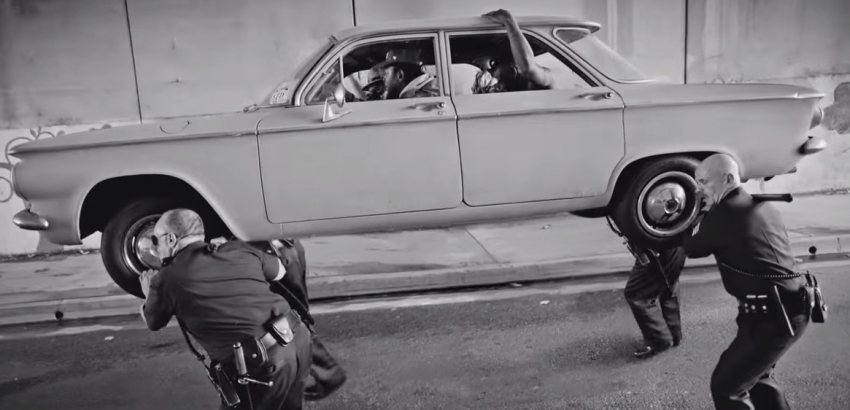
Scene from the video for Kendrick Lamar's "Alright"
It’s been a year since the death of Michael Brown, a year since the rebellion in Ferguson, a year since the Black Lives Matter movement began to shift the conversation in just about every avenue of American life. That shift can be seen in politics (from #BowDownBernie to Donald Trump’s threats to beat up protesters) and economics (the Black Youth Project’s embrace of the Fight for 15). It can also be seen, perhaps most obviously, in our culture — and in music, in particular.
Read moreMusic and Historical Memory
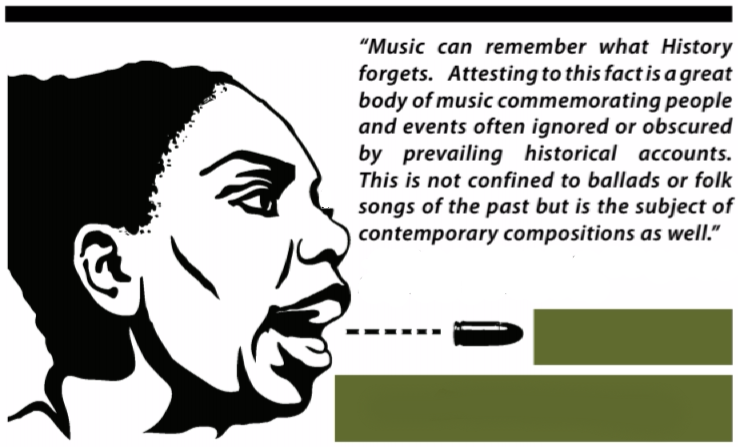
Image by Hope Asya
Music and memory have always been inseparable. After all, Memory is the name of the Goddess who was Mother of the Muses. The Muses, according to the poet Hesiod, "were nine like-minded daughters, whose one thought is singing, and whose hearts are free from care...who delight with song... telling of things that are, that will be and that were with voices joined in harmony." They called on Hesiod to sing their praises but they did so with a challenge: "You rustic shepherd, shame: bellies you are, not men! We know enough to make up lies which are convincing, but we also have the skill, when we've a mind, to speak the truth."
Read moreMirroring Hybrid Unpatriots

Nosotros quienes no somos patriotas
Nacimiento vaginal una razón por amar a madre
pero no fronteras jurídicas
Cantamos “La Bamba Rebelde”
We will cross, we will cross, we will cross
Flawless
"Flawless" is a dance performance piece about gender and sexuality choreographed for pre-professional dancers ranging in age from 13-17. We asked some of them to describe the piece and its development in their own words.
Choreography by Jenny Espino
Video editing by Aaron Garcia
Neoliberalism and the Radical Imagination

In late May 2015 Red Wedge editors Alexander Billet and Adam Turl spoke at the Left Forum in a workshop on "Neoliberalism and the Importance of the Radical Imagination." The above audio includes the presentations by Billet and Turl as well as the discussion that followed — touching on how neoliberalism has narrowed the radical imagination, the relationship of labor to culture, as well as possible practical and aesthetic strategies for contemporary art and culture.
Read moreSisters
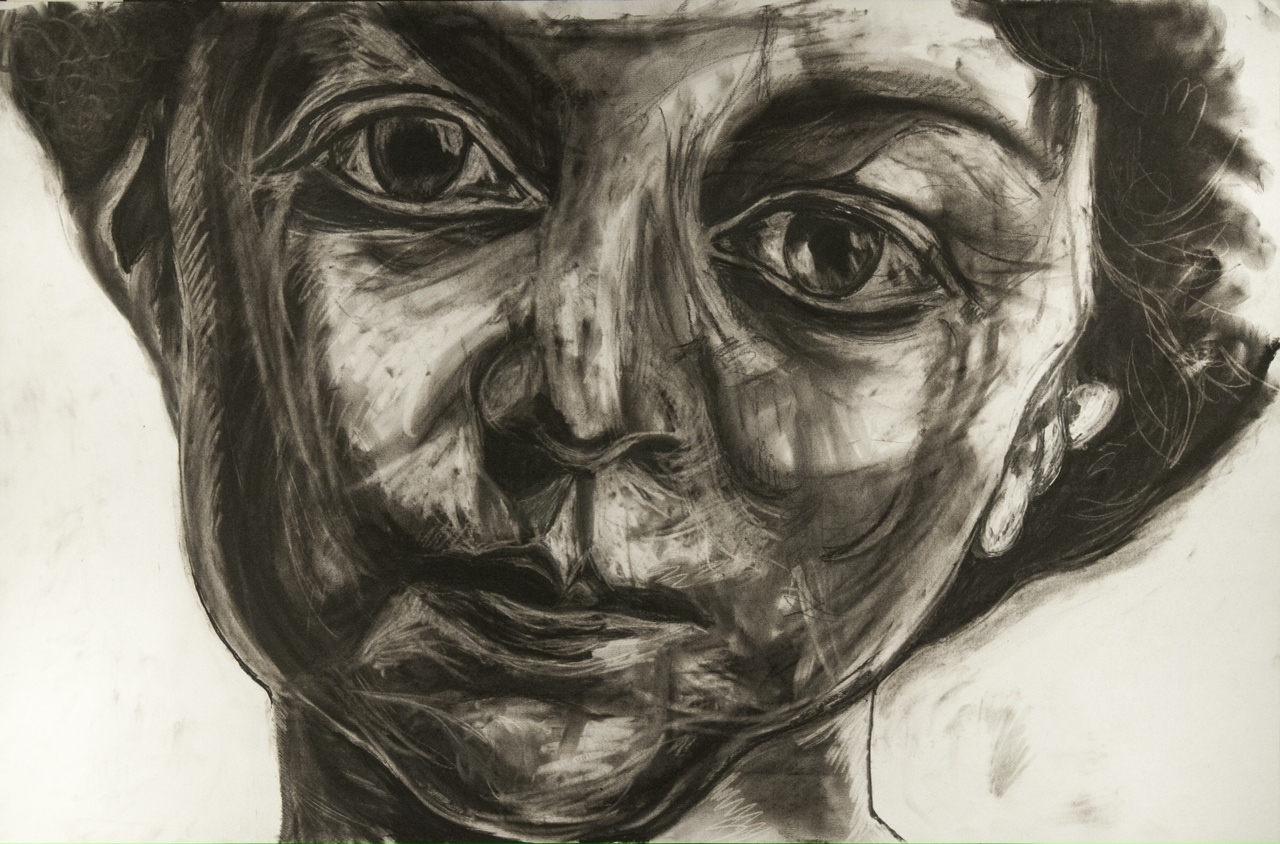
Alexandra Kollontai: communist, feminist, fiction writer (drawing by Sarah Levy)
She was one of the many who came to me in those difficult days for advice and spiritual guidance.
I had seen her at a number of delegate conferences, and remembered having been struck by her pretty, rather intense face with its pensive but intelligent eyes.
Today her face was pale, the eyes even larger and sadder than usual.
"I came to you because there is no one else to whom I can go. I have been homeless for the past three weeks – I have no money. I must have work! If I don't get: some means of earning a living soon, there is only one thing left for me – the street."
Read moreThe Streets Are Our Palettes: A Tribute to Vladimir Mayakovsky

From newsreel footage of a Soviet parade, with a wooden model of Vladimir Tatlin's Monument to the Third International (1919-20)
One of the delights of growing up politically lies in discovering one’s own traditions. In art they were nearly obliterated by Stalinism, declared redundant by the long post-war boom and generally buried in a "modernism" which was often apolitical and trite. It was exhilarating to unearth in Soviet Russia the most genuinely modern of modern art movements and Mayakovsky, the original "hooligan communist".
Vladimir Mayakovsky, the poetic loudspeaker of the Russian Revolution, came to socialist ideas with the enthusiasm of youth. He began to read Engels and illegal pamphlets under his desk-lid when he was 12. When later the same year his school was closed by Military Edict because of the 1905 uprising, he became chief school leaflet distributor. When he made his first contact with the illegal Bolshevik Party, he immediately presented them with his forester father’s shotgun. Aged 15, he was arrested in Moscow for helping to organise the escape of political prisoners from jail and was himself held in Novimsky Prison where he began to write poems. For the following 20 years he served the Revolution as a poet-agitator with the same audacity and passion. And when he shot himself in Moscow in 1930, he died a Bolshevik, brandishing his poems:
Read moreSubside Not
♫ when i break up with my boyfriend
what i need is my best friends
when i break up with my boyfriend
what i need is my best friends
girls and guys / exes and fly / babes of the future / celebrated witches / queer/androgynous no /
frontiers / love is / in / between
when i break up with my bf
and i’m driving thru the desert alone
Baltimore Poems
from the street: a wounded howl,
fuck the police and it echoes from the prisons,
fuck the police
the anger which vibrates somewhere low
in their chests, weighted down
by one too many
unwarranted traffic stops
when the tail light
wasn’t out, and the time
they killed that person--
no, not Mike Brown, the other time. no,
Neutral Mice (or Suicides Light As Air)
1.
a bird built a nest
in my grandfather’s
up-turned welding goggles
the day after
he died
I never told
my grandmother
this, but
the dead
are dead
and the living
are dead
and
by August
the nest
was empty
Rough Theses On To Pimp a Butterfly

If the grand conversation around race were to be neatly divided into “before” and “after” Ferguson, then Kendrick Lamar’s To Pimp a Butterfly would have to be regarded as something of an artistic landmark, a stunning musical distillation of the post-Ferguson mood. I am inclined to agree with Rolling Stone’s Greg Tate when he writes: “Thanks to D'Angelo's Black Messiah and Kendrick Lamar's To Pimp a Butterfly, 2015 will be remembered as the year radical Black politics and for-real Black music resurged in tandem to converge on the nation's pop mainstream.”
Lamar’s album has far exceeded all expectations. In its first day of release, To Pimp a Butterfly became the mostheavily-streamed album in Spotify’s history, racking up a reported 9.6 million listens on that day alone. It’s the first hip-hop or R&B album since Beyoncé to spend multiple weeks on top of the Billboard charts, and has already been certified Gold.
Read moreTwo Poems
I am not sure
Truly, she was nothing more than just a purse
But when lost, there was a problem
How to face the world without her
Especially
Because the streets remember us together
The shops know her more than me
Because she is the one who pays
She knows the smell of my sweat and she loves it
She knows the different buses
And has her own relationship with their drivers
She memorizes the ticket price
And always has the exact change
Once I bought a perfume she didn’t like
She spilled all of it and refused to let me use it
By the way
She also loves my family
And she always carried a picture
Of each one she loves
Black Future Month Is Here
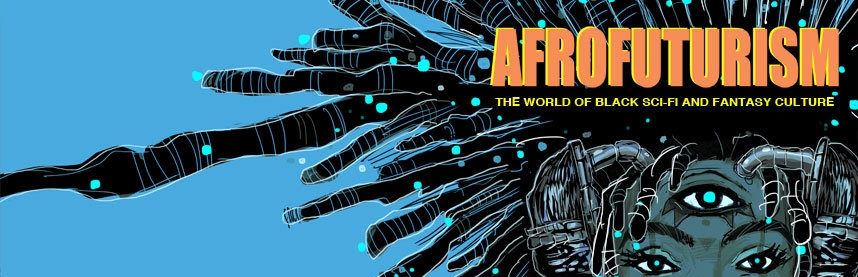
Black Future Month is here.
Black Future Month is the name film curator Floyd Webb and I selected as the title for our February Afrofuturism film series each Thursday at the SMG Chatham Theater in Chicago. Situated in the Chatham neighborhood on the Southside of Chicago, Floyd and I, as creators of Afrofuturism849, aimed to introduce curious audiences to the range of sci fi works and documentaries highlighting ideas, stories and people within the sci fi, speculative fiction, and science worlds. We showcased the Cameroonian film Les Saignantes about women in a corrupt mystical and futuristic Cameroon. We showed “White Scripts, Black Supermen” on the early black comic heroes and brought out Turtel Onli, father of the Black Age in Comics, comic creator Jiba Molei Anderson and Institute of Comic Studies cofounder Stanford Carpenter to discuss the project. Amir George, co-curator of the Black Radical Imagination, a series of experimental shorts introduced his works and several physicists and astronomers were on hand to discuss our science documentaries. While displaying my book Rayla 2212, a story that follows a war strategist on a former earth colony 200 years into the future who time/astral travels, one attendee remarked that she had no idea that black sci-fi and comics existed.
Read moreArt + Revolution
The following is the lead editorial from Red Wedge's first full print issue, which is being sent to the printers shortly. Copies of Issue One can be ordered at the Red Wedge shop.
* * *
In August 2012 a handful of Chicago-based Marxist art junkies launched Red Wedge. The moment was distinctive: Tunisia, Egypt, Occupy Wall Street, the Indignados in Spain, general strikes in Greece and South Africa. Our aim was to try to pull together the artistic and creative flourishes that came with the social and political upheavals: the music and poetry of Tahrir Square, the painting, sculpture and performance of Occupy. It was impossible to ignore the transformation of public space when working-class people took it over. The static reminders of authority and alienation became living breathing carnivals of resistance. It was our belief that this indicated a new audience eager to discuss the aesthetics of rebellion and ready to explore the intersection between art and radical theory. We hoped our website might be a humble contribution to building and cohering a new cultural resistance.
Read moreUndead of the World Unite
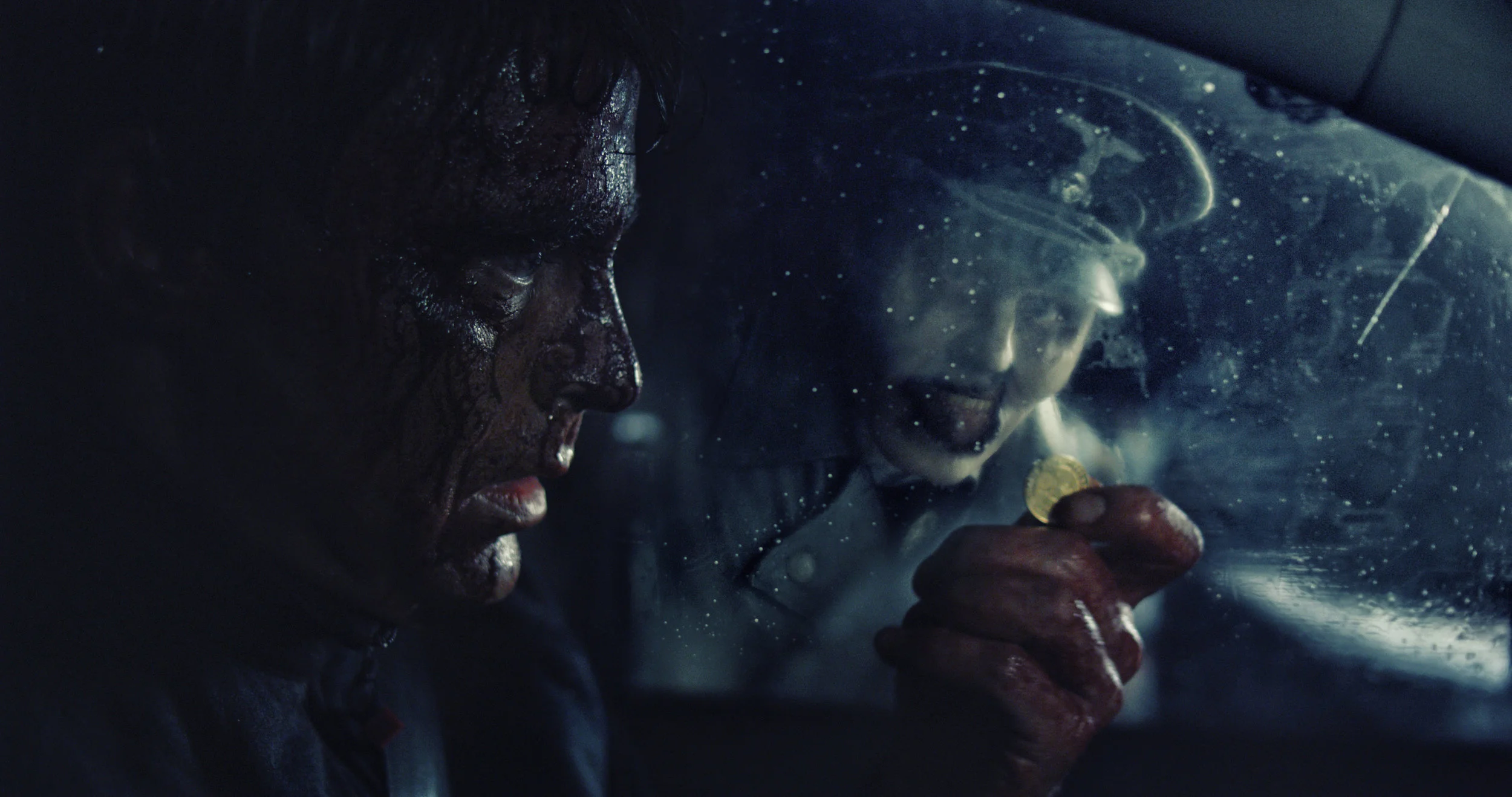
I would love nothing more than to watch a film that was dedicated to the resurrection of Soviet forces to stomp some Nazi zombies but this just wasn't entirely the case with Dead Snow 2: Red vs. Dead. Sure it is true the Soviet comrades are raised from their frosty graves, but to be honest they don't get much screen time and they only kick ass for a few minutes. This film is much more about Martin and his gaggle of American sibling sidekicks. Yes DS2 was incredibly entertaining-- I laughed out loud, and raucously so, a number of times, but it was not exactly what I was expecting considering the caliber that the first film hit viewers with.
This sequel was much more about playing with the zombie genre. And rightfully so! Director, Tommy Wirkola, clearly understood that if you can't top the first film you should always air on the side of humor, particularly with a genre like horror. This film had a lot going for it. It had gore; it had bizarre nerdy team of Americans that the film job that affectionately jabs at- and it has an audience who is already on the right side of seeing Nazi zombies stomped into the dustbin of horror-comedy. This proved a good combination and it certainly deserves a watch this Halloween season.
Film picks up where the first one left off just as Martin is picking up that points fallen underneath his car seat he's just sought off his arm murdered his girlfriend with an ax and is nearly escaped Col. Herzog and is not see zombie men. And then that coin the slow pan up the shaking turn to the left and then the crushing sound of the glass of the window breaking and the film ends. We pick up from that moment. Right off the bat there are cringe worthy scenes including one of a trucker who tries to give mouth-to-mouth resuscitation to Col. Herzog the living dead Nazi. There’s tongue and everything. Every single second that truck driver tries to revive Col. Herzog you are squirming in your seat. The film is filled with moments like that these little vignettes of humor and gore; moments that allow the audience a lot of release and comic relief. But don’t worry I won’t go over any more of them! I don’t want to ruin too much of this for you because some of them are genuinely classic.
I want to take some time to parse through a few representations within the film, specifically gender, sexuality, and nationality. This little zombie movie surprisingly takes up quite a few important questions and also the representations of the characters for which these questions play out are quite engaging. Engaging even in their one-dimensional horror form. But that’s what horror is, isn’t it? Horror can do these things. Horror can toy with the status quo, can explore politics, and can play with gender and sexuality. It can allow the audience to let its guard down and also vent about its frustrations with the everyday world.

As a feminist and a female identifying person, while watching this film I was amazed not to be that upset at all by the gender portrayals. I have to say doesn’t happen very often, usually I watch a film in a constant state of irritation. In fact, these queer and female indentifying people were actually likeable characters who were intrinsic to saving the day. There were no easy nude scenes, no scared blondes running up the stairs when they should be running out of front doors; just brave, nerdy Star Wars quoting women and a queer emo-kid museum worker.
I was also surprised that the film avoided a hyper sexualization that all too often sequels exploit to rein in an audience. In fact, it is not until the closing scenes (and no, I won’t ruin that charming, albeit gut-churning ending) that things get steamy.
The question of national identity, although a current throughout the entire film, does not come across as a central question. Rather it comes across as camp, two historic forces duking-it-out, decrepit and rotting. Though we obviously are rooting for our zombie soviet comrades, the real heroes end up being the native Norwegians and the goofy Americans. This is what threw me off the most about the film- going into this viewing I was beyond excited about the prospects of watching soviet on Nazi carnage. I was looking forward to more charming nods of revolutionary ephemera (I still highlight the hammer and sickle reference of the first film), sarcastic political jokes or jabs, something more politically sophisticated and unapologetically funny- funny is what I got, but sophisticated? Not so much.
Absolutely add this film to your watch list for this season if you can stomach entrails, a bizarre soundtrack, and subtitles. It’s a short, punchy, fun-filled gore fest even if the premise is a little misleading.
C'est ne pas mon corps: Celebrity photo leaks & the treachery of images
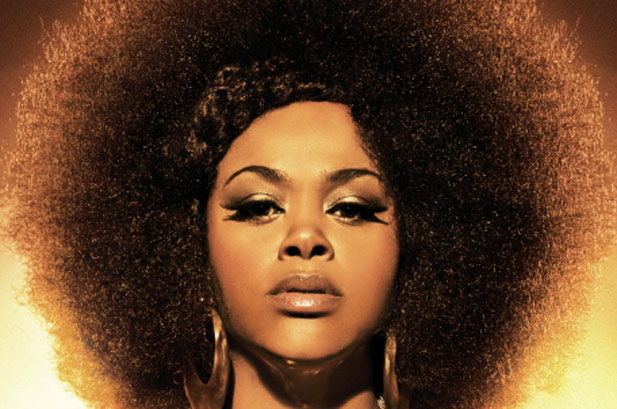
Roland Barthes claims that the photograph repeats what can never be repeated existentially. It is the “That-has-been” or the Intractable. The moment, the person, the thing, which has been captured can no longer be again -- and yet it will always be. Understanding the relationship between a photograph and its subject requires nuance, the image is after all of the subject, but is not the subject itself. Misconceptions organized around this contradictory status have flared up in the recent scandal involving images of nude celebrities that have been leaked to the internet.
Yet before another piece about this photo leak can begin, it must be said that there was absolutely no adequate media response about this breach of privacy for these celebrities. More importantly perhaps, was that some of the women whose photos were made public -- namely the black celebrities, were hardly mentioned at all. Women’s bodies are never granted protection in this society. However countless more abuses are visited upon the bodies of women of color. This is because black women’s bodies have always been seen as the common property of America. This is why Jill Scott, a black vocalist whose images were also leaked along with those of Jennifer Lawrence etc, was left out of the initial outrage.
Then there is the prevalent “fake bodies” thread that declared some of the pictures were false images of a celebrity’s face pasted onto another person’s nude form. What was actually happening was the misidentification of other women, but were images of real bodies just the same. There is a gross insult of being labeled as “fake” when images of these real people have been intentionally misattributed. Why are some bodies more valuable than others? What is their worth? What does it mean that some of the celebrity women in question denounce these “fake” bodies as beneath the standards of their own crafted perfection?
Sure this is the mainstream media we’re talking about here, of course their line will be flawed, except all that was offered in the feminist media was an obscene amount of moralism, and equally shallow analysis. What these sorts of arguments lack is a nuanced understanding of the photographed image, a discussion around consent, and enthusiastic body positivity.
The images in question are of nude bodies, but they are not nude bodies themselves. And what does it even mean to say they are images of nude bodies? The moment an image is captured, it ceases to be the thing that was captured- it is only a referent, a version of the past. What can be tricky is that the photographed image is still an object, it is a tangible thing, it has, as Catherine Zuromskis puts it, a concrete materiality. So it lives on in its own historical moment, even when that moment has long passed. These images, some taken by the women themselves, others by their partners, others still not of the women in question, but a confused array of other bodies captured in similar ways. These are snapshots of intimacy, yet they are not intimacy. To confuse the two conflates the real experience with the pantomime of its activity.
When Playboy comes out and says, “Jennifer Lawrence Is Not a Thing To Be Passed Around,” you know something is amiss. In its attempt to offer refreshing commentary, Playboy only reveals the logic that has made it a megolith of misogyny: a woman and an object are indistinguishable. True to their sexist form, Playboy misses what is actually taking place. It is an image of Jennifer Lawrence that is passed around at a party, not her person. Yet to Playboy, a body and an image of a body are the same thing.
Understanding that there is a difference between a photographed image of a body, and a body is essential in cases such as these. Commentators were quick to shame those who would look upon these images, and equated leaking the images as a sort of sexual assault, or even rape. Let us state without apology that a misappropriated image, presented to the public outside of the realm of ethics, or legal parameters, for either private or public consumption, is not rape. It is a violation, but one utterly distinct from physical sexual assault. The violence we saw in Steubenville, Houston, and in Vancouver, cases where women were brutally raped by multiple men, were distinct and separate phenomena than a case where privacy -- not a human -- has been violated.
To further confuse the issue, commentators have raised the question of consent. It is as if one may consent to the sexual consumption of an image in the way one consents to sex itself.
While it is certainly true that before pilfering the images in question, those who stole the photographs might have asked permission to use them, which is the standard ethical practice when one aims to profit through the use and dissemination of another person’s image. But consent to produce an image should not be confused as consent to consume an image. It is of course impossible for the subject of an image to consent to how that image is consumed.
Our world runs off of the consumption of images. Through entertainment and advertising to security cameras that protect private property to the surveillance that props up the State. It is rare enough that anyone is asked for permission to take an image and none of us are given a choice on how those images are deployed or consumed.
Conflation over consent has lead to absurd recriminations that merely looking at these photos is the same as committing a sexual violation. There are those cultural commentators that alleged that the leak, as well as anyone who looked at the images were complicit in sexual assault. The Guardian published one such piece by Australian novelist and playwright, Van Badham. In her piece subtly titled, If you click on Jennifer Lawrence's naked pictures, you're perpetuating her abuse, she writes: “It’s an act of sexual violation, and it deserves the same social and legal punishment as meted out to stalkers and other sexual predators.”
Really, Van Badham? In what world do you live where sexual predators actually receive any sort of punishment? The kind of punishment you seem to have in mind has no humanity to it. If anything collective community responses by those affected are the only solutions -- real restorative justice, I don’t think that’s what you have in mind when you call for punishment.
Then there is Badham’s obsession with privacy: “The need for privacy is not only a sacred place to work out who we are, what we do or how we think; it’s a psychological refuge from overwhelming public dissection necessary for anyone’s mental health, famous or not.” We should not be championing privacy, rather we should be demanding a more open and accepting culture. We should not feel like our only place to seek refuge is inside our own sacred individual space, but rather we should fight for all spaces to be safe and supportive. The mystification of the body only serves to perpetuate body negativity, exclusivity and the need to expose some bodies. The truth is we are all naked under our clothes, and that is okay. The more red-tape is thrown around issues like these, the more tantalizing they become.
Rape Culture certainly explains why the actual bodies of women are violently passed around, abused, and without recourse for the abused. Sexism explains why women’s bodies are extra commodified, and seen as objects to be plastered all over the internet, sides of buildings, and on bedroom walls. Sexism and Rape Culture must both be dismantled. A new and better world full of respect, equality, and solidarity is what we need. We will not achieve this by further body shaming, mystifying, and ultra-moralism. We win these things by identifying real threats, and developing community based solutions to rid ourselves of them.
Jennifer Lawrence, as well as these other celebrities had snapshots hacked from their iCloud accounts and spread around the internet. This act is not defensible. It was prefaced on sexist cultural norms that demand the offering of women’s bodies up for consumption. In this case, sexist culture trumped Jennifer Lawrence, Jill Scott and their associates’ right to privately express their sexuality through the captured image. What did not happen was rape. An image cannot be raped, it can be consumed. In this case, the manner of consumption was both unethical and reflected the prevailing sexist current already too obvious in celebrity culture. Underlying sexism has equated Jennifer Lawrence to her image, in so doing it has deliberately conflated the object and the subject in order to sell both. We as artists, as art consumers, as feminists and social radicals need to be able to distinguish between the subject and the object and construct our criticism accordingly.
An Uprising In Pictures
About two weeks ago, a group of six of us from Syracuse joined other Black organizers, cultural workers, healers, etc. from all across the country for a weekend of national action in Ferguson. According to the organizers, “the Black Life Matters Ride was organized in the spirit of the early 1960s interstate Freedom Rides to end racial segregation.” Prior to going to Ferguson that weekend, like many other people, I could not take my eyes off of what was happening there. When my friend and colleague Sherri Williams, a PhD candidate and journalist asked if I wanted to, I gave a resounding “yes!”
We arrived in Ferguson on the Saturday of the nation-wide march. Even though I had seen the footage, the photos, read the reports, I still wasn’t sure what to expect when we arrived. We parked our van in a shopping center and then we walked down West Florissant, a main street in the city. As we walked to place where everyone was gathering to meet for the march, we passed by a number of boarded up storefronts with messages thanking The gray skies and clouds that hung low above our heads seemed to capture our collective state of grieving and mourning not just for Mike Brown, but for so many black folks that have been so violently killed and brutalized at the hands of the state.
Read moreIn Defense of Art History: Against the Neoliberal Imagination

"A lot of young people no longer see the trades and skilled manufacturing as a viable career. But I can promise you, folks can make a lot more, potentially, with skilled manufacturing or the trades than they might with an art history degree. Now, nothing wrong with an art history degree — I love art history. So I don’t want to get a bunch of emails from everybody. I’m just saying, you can make a really good living and have a great career without getting a four-year college education, as long as you get the skills and training that you need.” — Barack Obama speaking to workers in Wisconsin.
It’s been several weeks since President Barack Obama uttered these awkward words during a speech. But as if to drive the point home, they haven’t completely faded from the headlines. The days afterwards naturally saw a great many lovers of art and history peeved at what the president had said, including some truly accomplished in the field. When Ann Collins Johns — a professor of art history herself at the University of Texas at Austin — wrote an email to Obama expressing her disappointment at his words, Obama surprisingly felt the need to personally respond!
Read more